Animals & Nature
Venus Flytrap
The Venus flytrap is a small carnivorous plant native to coastal wetlands in North and South Carolina.
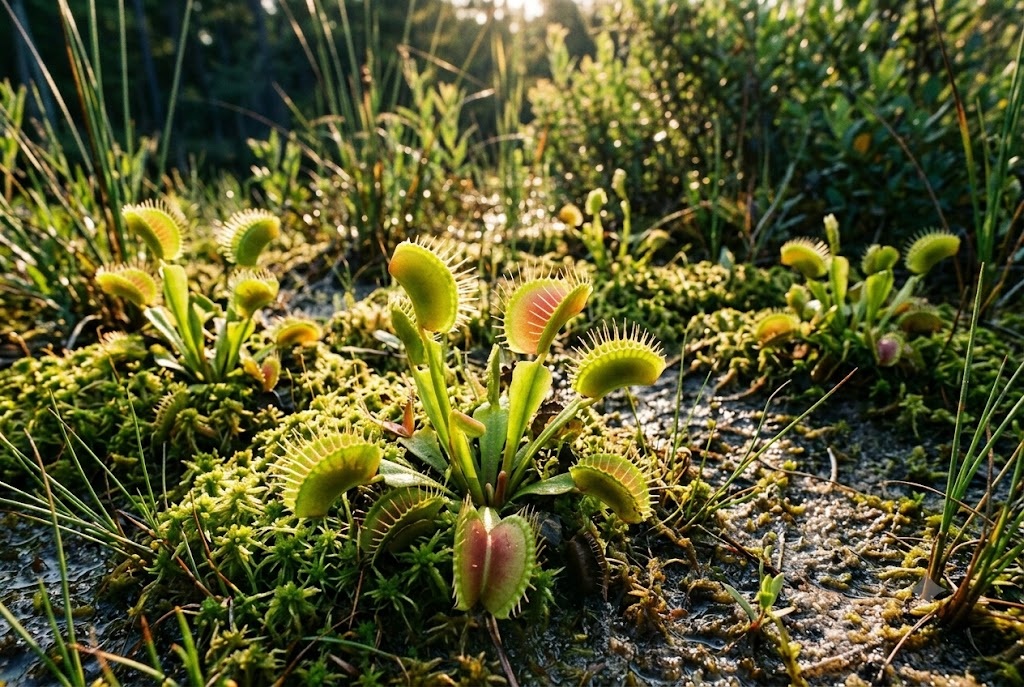
The Venus flytrap is a small perennial carnivorous plant native to a limited area of the coastal plains of North Carolina and South Carolina. It grows in sunny, wet habitats with nutrient-poor soil and still obtains most of its energy through photosynthesis.
Each trap is formed by two hinged leaf lobes lined with sensitive trigger hairs. When prey stimulates the hairs in the required sequence, the lobes close and the plant digests the captured animal. Its prey consists largely of crawling arthropods such as ants, spiders, beetles, and grasshoppers.
Quick facts
- The Venus flytrap's scientific name is Dionaea muscipula.
- Its natural range is concentrated in the coastal plains of North Carolina and South Carolina.
- The plant receives most of its energy from sunlight through photosynthesis.
- Trigger hairs inside the trap help the plant distinguish potential prey from a single accidental touch.
- Wild Venus flytraps eat more crawling arthropods than flying insects.
A surprising fact
Flying insects make up less than five percent of the prey measured in one U.S. Fish and Wildlife Service summary.