History & Culture
Ancient Olympic Games
The Ancient Olympic Games were a recurring Greek athletic and religious festival held at Olympia in honor of Zeus.
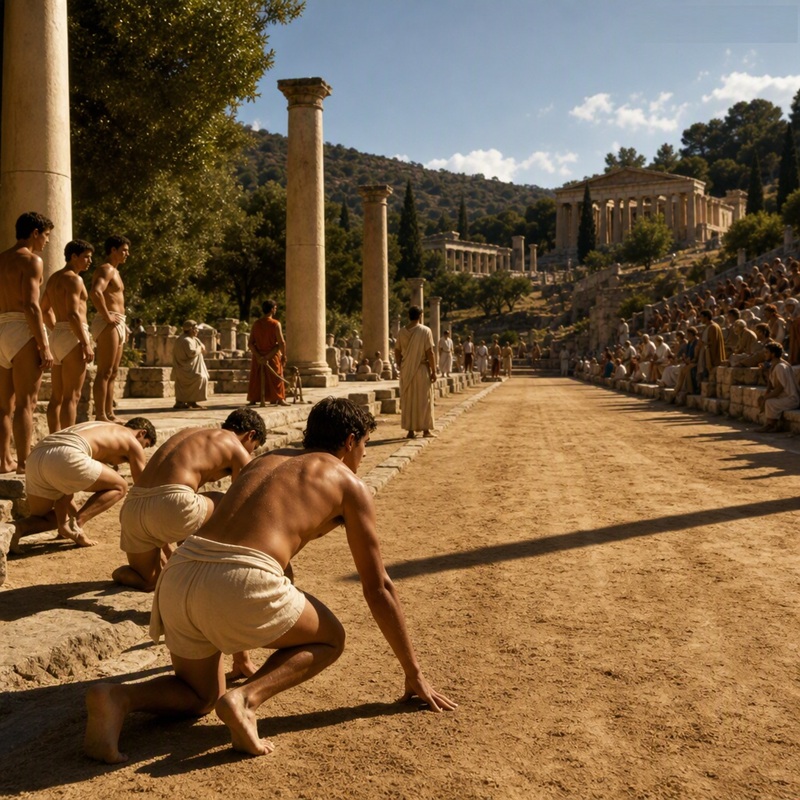
The Ancient Olympic Games were a recurring athletic and religious festival held at Olympia in ancient Greece. The recorded tradition begins in 776 BCE, and the Games took place every four years in a sanctuary dedicated to Zeus. Athletes and spectators came from Greek communities around the Mediterranean, making the festival an important Panhellenic gathering.
Competitions changed over time and included foot races, wrestling, boxing, pankration, the pentathlon, and horse and chariot races. Victors received a wreath of wild olive rather than medals. The ancient festival continued into late antiquity, with authoritative records placing its final celebration in 393 CE, long before the modern Olympic Games began in 1896.
Quick facts
- The recorded history of the Games begins in 776 BCE, and they were held at Olympia every four years.
- Olympia was a major sanctuary of Zeus, and the competitions formed part of a religious festival.
- Events included running, wrestling, boxing, pankration, long jump, discus, javelin, and equestrian competitions.
- Olympic victors received a wreath made from wild olive rather than gold, silver, or bronze medals.
- UNESCO dates the regular celebration of the ancient Games from 776 BCE through 393 CE.
A surprising fact
Kyniska of Sparta became the first known woman to win an ancient Olympic victory when horses she owned won a chariot race.