History & Culture
Fall of the Berlin Wall
The fall of the Berlin Wall was the November 1989 opening of border crossings that had divided East and West Berlin for decades.
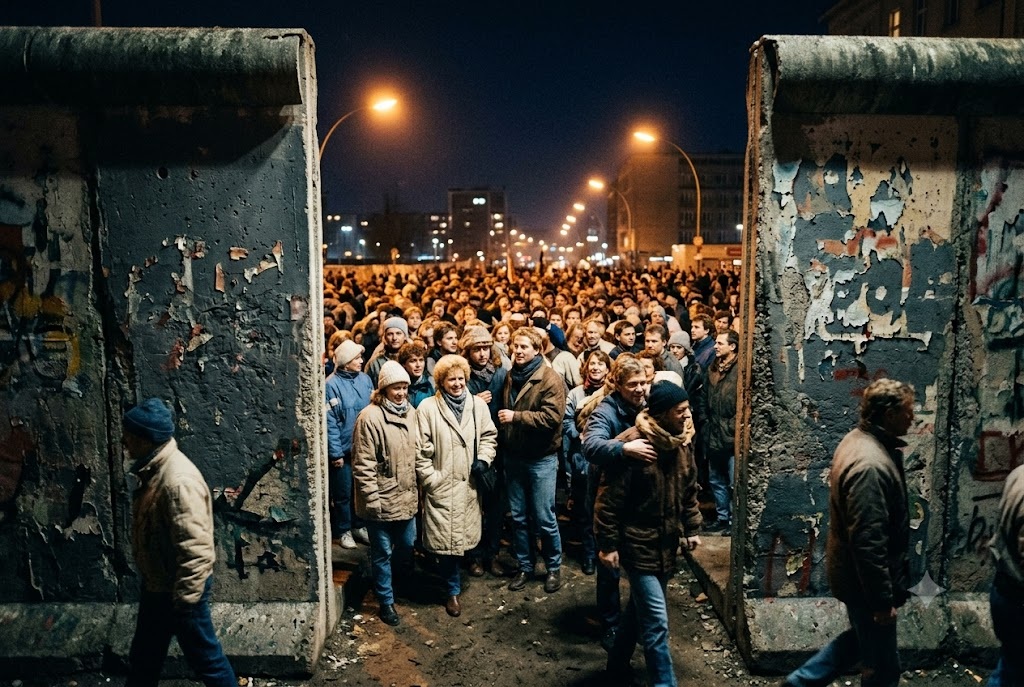
The fall of the Berlin Wall refers to the opening of the fortified border between East and West Berlin on November 9, 1989. After East German official Günter Schabowski announced new travel rules at a televised press conference, large crowds gathered at border crossings and demanded passage into West Berlin.
Late that evening, guards opened the Bornholmer Strasse crossing, and other checkpoints soon followed. The event became a defining moment in East Germany's peaceful revolution and helped clear the way for German reunification on October 3, 1990. The physical wall was dismantled gradually rather than disappearing that night.
Quick facts
- The Berlin Wall opened on the evening of November 9, 1989, after dividing the city for more than 28 years.
- East German official Günter Schabowski announced new travel rules during a televised press conference that evening.
- Crowds gathered at the border crossings after Schabowski indicated that the new rules would take effect immediately.
- Bornholmer Strasse became the first crossing to open fully, and thousands of people entered West Berlin that night.
- Germany formally reunified on October 3, 1990, nearly eleven months after the border opened.
A surprising fact
Most of the wall through central Berlin was physically removed between June and November 1990, months after its celebrated fall.