Places & Landmarks
Taj Mahal
The Taj Mahal is a seventeenth-century white-marble mausoleum complex in Agra, India, commissioned by Mughal emperor Shah Jahan.
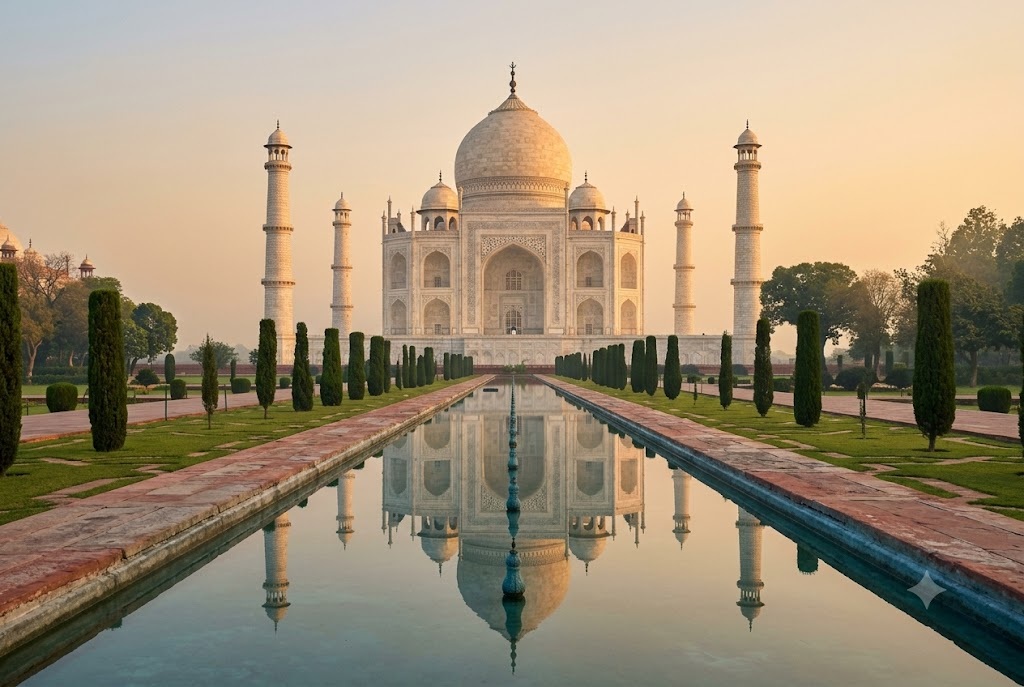
The Taj Mahal is a monumental mausoleum complex in Agra, India. Mughal emperor Shah Jahan ordered it built in memory of his wife Mumtaz Mahal. The white-marble mausoleum was constructed mainly between 1631 and 1648 and stands within a carefully planned complex of gardens, gateways, and additional buildings.
Its architecture combines symmetry, calligraphy, carved stone, inlaid decoration, domes, and minarets. The complex reflects the artistic and architectural traditions of the Mughal Empire. UNESCO inscribed the Taj Mahal on the World Heritage List in 1983, and the Archaeological Survey of India manages the property.
Quick facts
- The Taj Mahal stands in Agra in the Indian state of Uttar Pradesh.
- Shah Jahan commissioned the complex in memory of Mumtaz Mahal.
- The principal white-marble mausoleum was built between 1631 and 1648.
- The property includes gardens and several structures in addition to the central mausoleum.
- UNESCO added the Taj Mahal to the World Heritage List in 1983.
A surprising fact
The famous white-marble tomb is only the central element of a larger planned complex with gardens, gateways, a mosque, and other buildings.